
2026-04-24 · 4 min read · Musky Lakes
Wisconsin Musky Stocking Is Taking a Hit
A 70 percent reduction in musky stocking is a real warning sign for Wisconsin anglers, local fisheries, and the communities built around them.
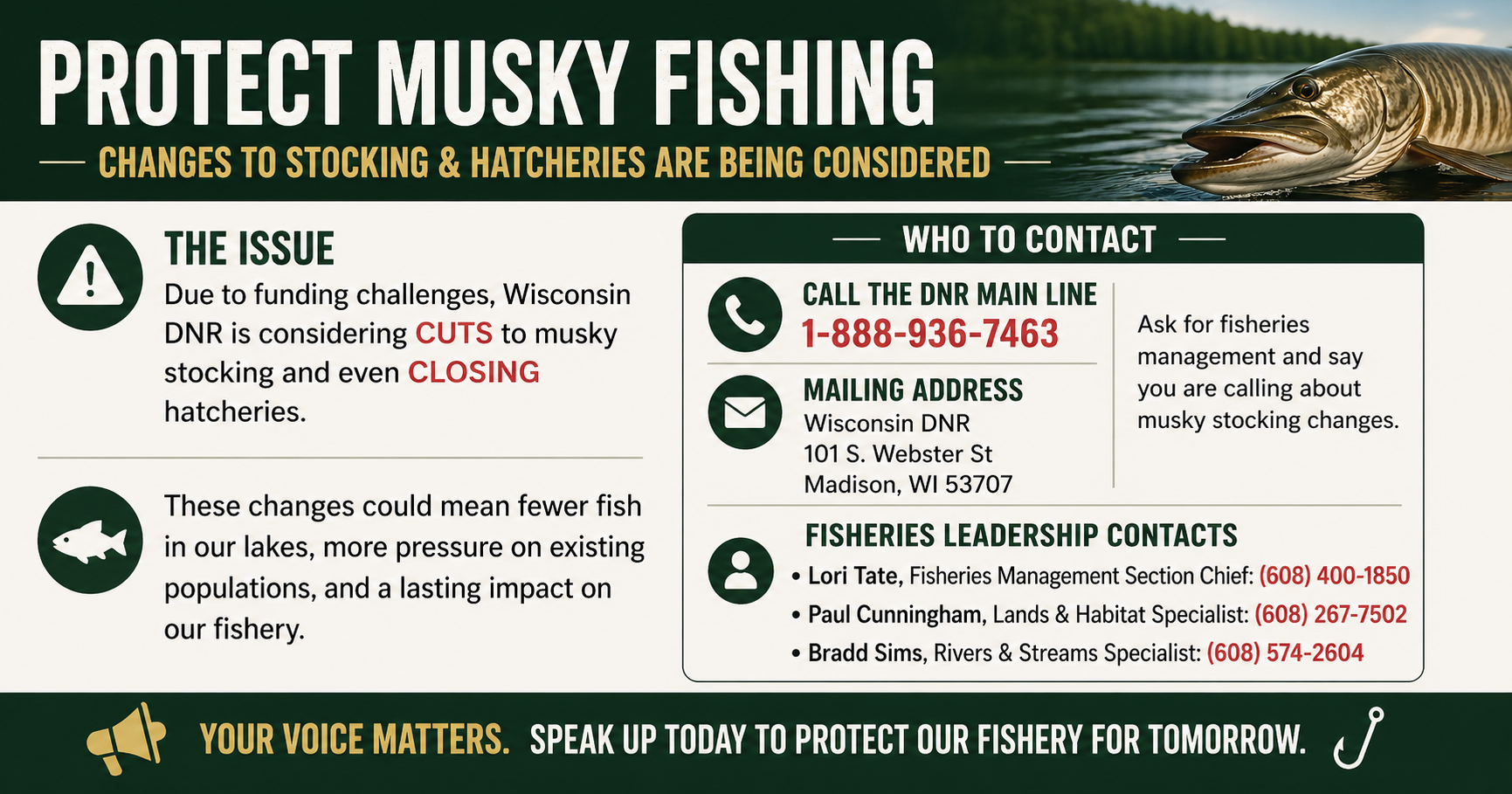
This is not a small trim around the edges
On April 23, 2026, Wisconsin Public Radio reported that the Wisconsin DNR will stock 40,000 fewer muskies this year, which the agency says amounts to a 70 percent reduction. That is part of a broader fish-stocking cut of roughly 11 percent statewide, alongside hatchery closures and reductions in monitoring and habitat work.
According to the report, the Brule and Osceola state fish hatcheries are closed for the year, and the DNR says the agency lacks authority to spend money that lawmakers previously transferred into the fish and wildlife account. However the politics shake out, the result for anglers is simple: fewer muskies going into Wisconsin waters and less support work happening around the fishery.
Why musky anglers should care
Wisconsin is still one of the defining musky states in North America. The DNR itself describes stocking as one of the primary tools used to manage muskellunge, especially on waters where natural reproduction is limited or inconsistent. When stocking takes a hit this hard, it does not just disappear into a spreadsheet. It lands on actual lakes, actual year classes, and eventually on the quality of the fishery anglers see on the water.
Not every musky lake depends on stocking equally, and some Wisconsin waters are naturally self-sustaining. But plenty of fisheries are managed with stocking as part of the long-term plan. When that pipeline gets interrupted, the damage can linger longer than one budget cycle, especially when it is paired with less fish population monitoring, less habitat management, and fewer staff positions in the system.
This is bigger than one season
The danger here is not just fewer fish in 2026. It is the signal that core fisheries work is becoming easier to delay, shrink, or treat as optional. Wisconsin musky management has always depended on a mix of hatchery capacity, field biologists, data collection, habitat protection, and public support. If several of those pieces weaken at the same time, anglers should expect more uncertainty and slower recovery on the back end.
That matters beyond musky diehards. Musky fishing supports guides, bait shops, lodges, gas stations, restaurants, and small towns that benefit from destination anglers. A weaker fishery eventually shows up in fewer trips, less license enthusiasm, and less confidence that Wisconsin is willing to protect one of its signature fisheries.
What we can do about it
If you care about Wisconsin musky fishing, now is the time to be visible and specific. Use the DNR fisheries central office staff page, the regional fisheries biologist directory, and the Wisconsin legislative map to reach the right people directly.
The budget presentation linked by WPR is also worth reading if you want the broader context behind the cuts: Fish Budget External Presentation (PDF).
Start with the DNR
- Call the main DNR line: 1-888-936-7463.
- Ask for fisheries management and say you are calling about musky stocking changes.
- Mailing address: Wisconsin DNR, 101 S. Webster St, Madison, WI 53707.
Contact fisheries leadership
- Lori Tate, Fisheries Management Section Chief: (608) 400-1850.
- Paul Cunningham, Lands and Habitat Specialist: (608) 267-7502.
- Bradd Sims, Rivers and Streams Specialist: (608) 574-2604.
Reach your regional biologist
- Find the fisheries biologist assigned to your lakes or county in the DNR directory.
- Make your note specific: mention the lake, the local fishery, and why reduced stocking matters in your area.
- Examples from the DNR staff directory include Kirk Olson, Greg Matzke, and Eric Wegleitner, but the best contact is the biologist tied to your water.
Use public comment channels
- Aaron Cole, fisheries management public-meeting contact: Aaron.Cole@wisconsin.gov.
- Phone: (715) 418-0897.
- If public meetings or fisheries-plan discussions open up, submit comments there too.
Contact your legislators
- Use the Wisconsin legislative map to find your State Assembly representative and State Senator.
- This issue involves spending authority, so lawmakers matter here, not just the DNR.
- Best combo: call DNR, email your fisheries biologist, and contact your legislators in the same week.
Say something while it still matters
Musky anglers are used to grinding through tough conditions, but this is not the kind of grind we should normalize. A 70 percent cut to musky stocking is not a healthy adjustment. It is a warning shot.
If Wisconsin wants to keep its reputation as a premier musky state, this is the kind of moment that needs pushback, attention, and follow-through now, not after another season quietly slips by.